Antique Star Chart 1708 — Planisphaerium Copernicanum

Description
A celestial map of the Copernican system, published in Amsterdam in 1708
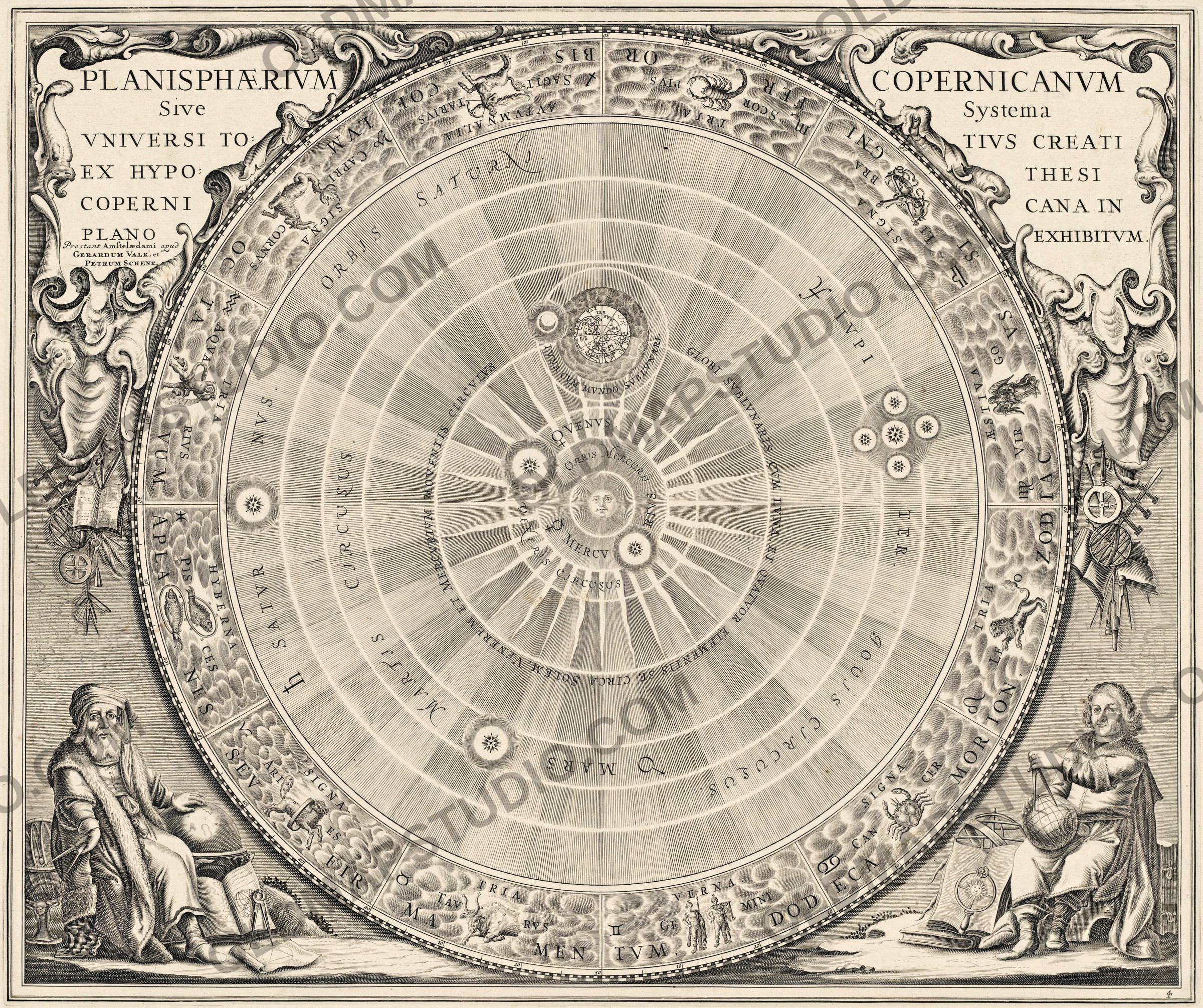
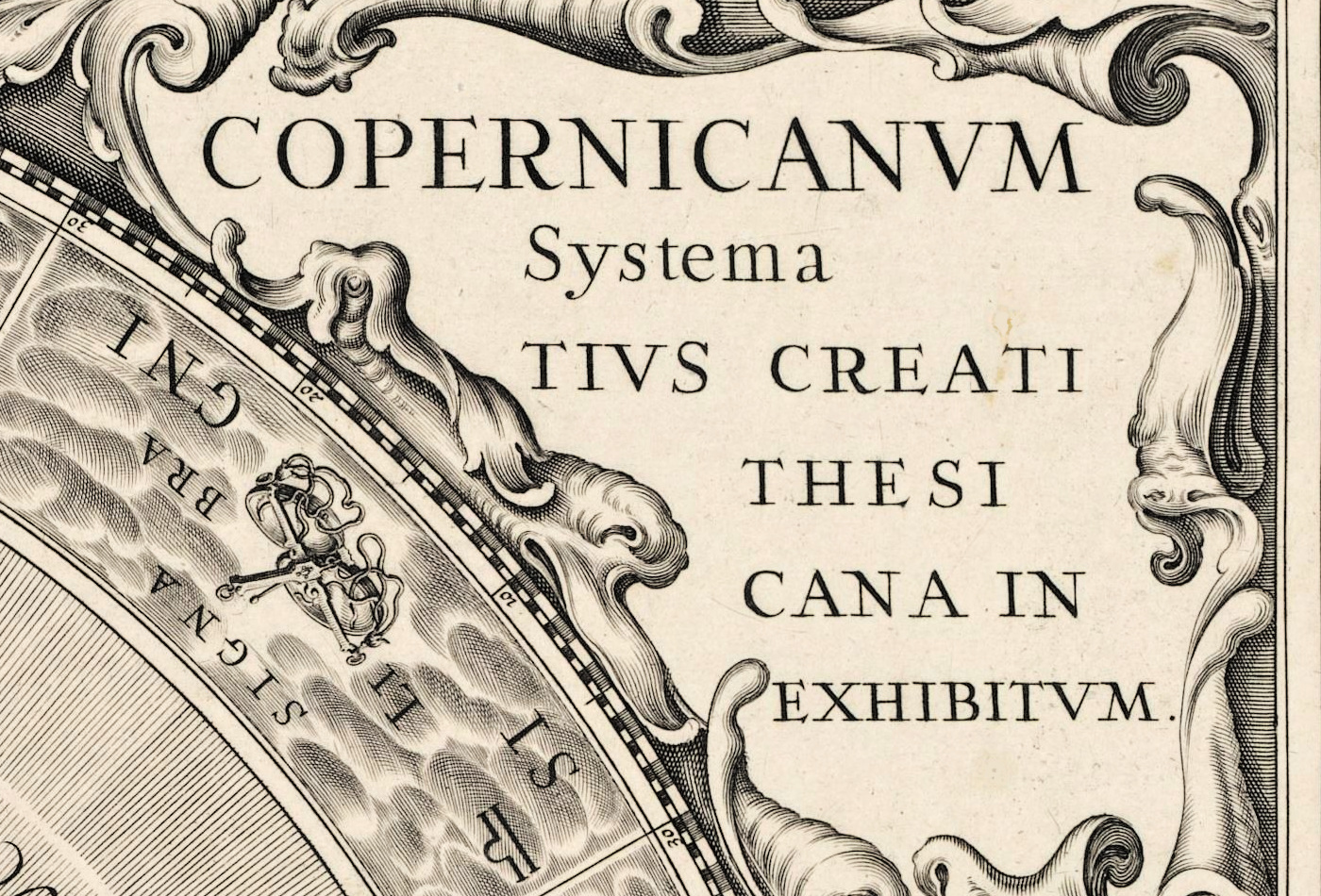
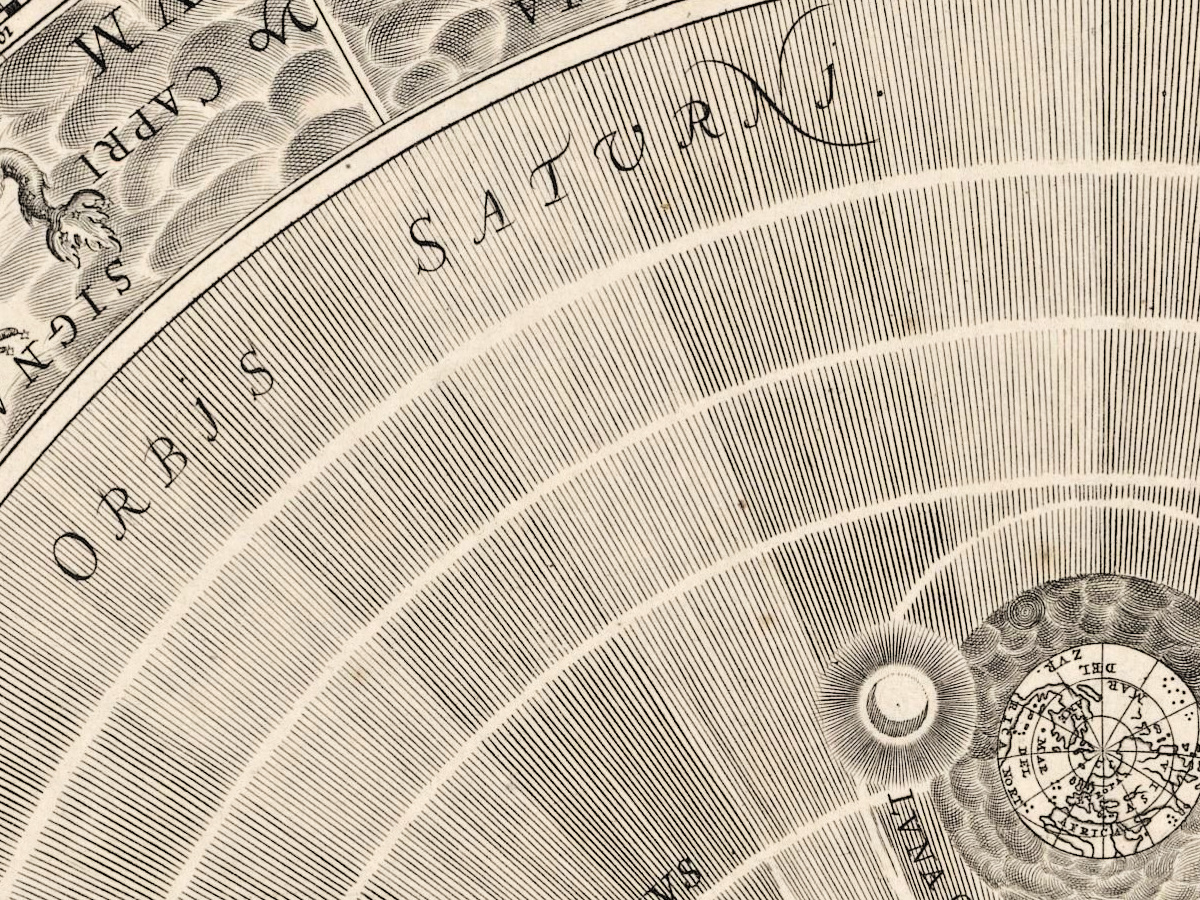
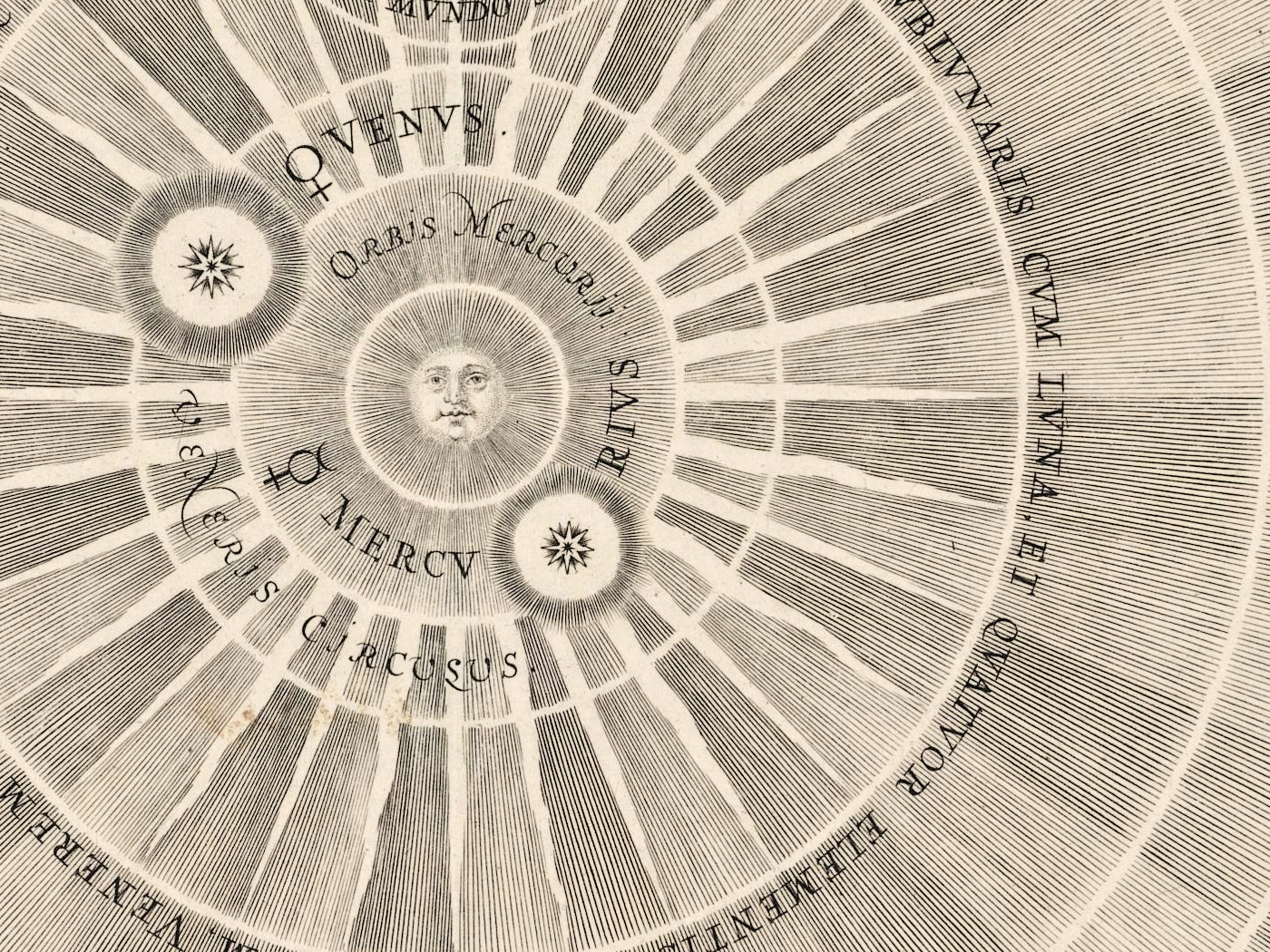
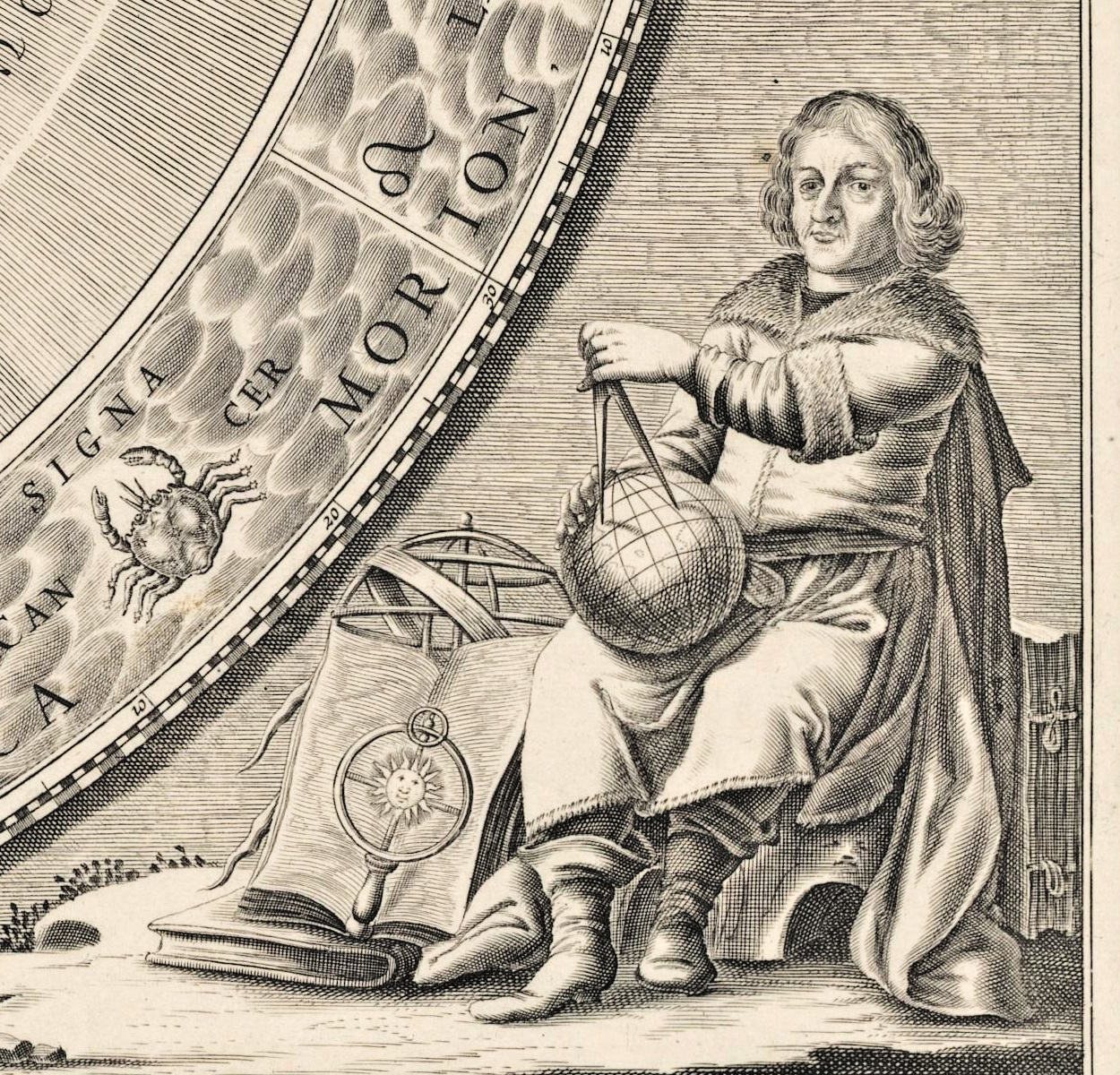
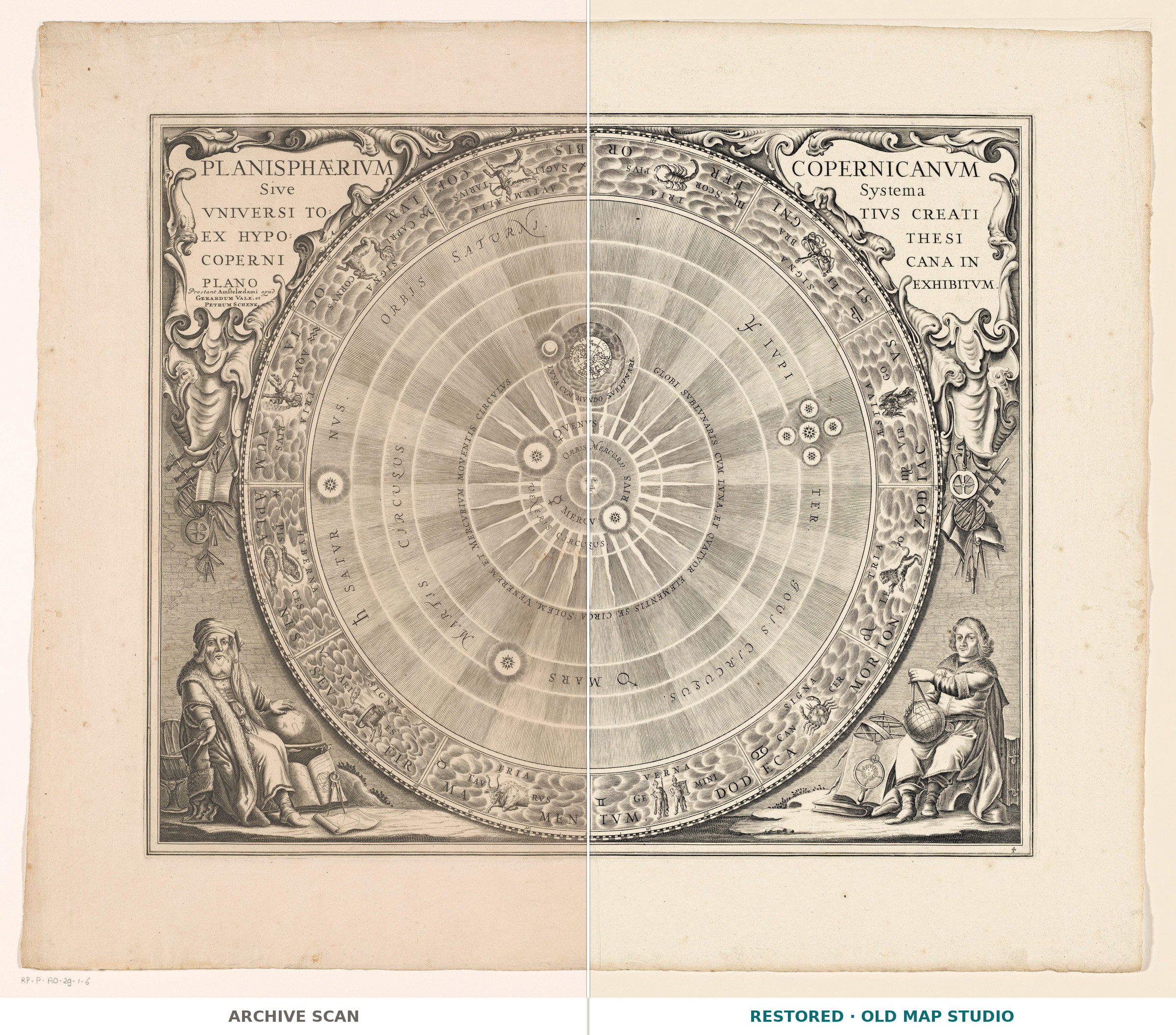
Planisphaerium Copernicanum sive systema universi totius creati ex hypothesi — a planisphere of Copernicus, or the system of the whole created universe on his hypothesis, set out on a flat sheet. The sun sits at the centre, the planets run their orbits around it, the earth is one of them, and the zodiac closes the whole thing in an outer ring. It is an argument drawn as a diagram: in 1708 the heliocentric order was still one hypothesis among several, and this plate belongs to a set in which the rival systems each got a sheet of their own.
Galileo on the same sheet
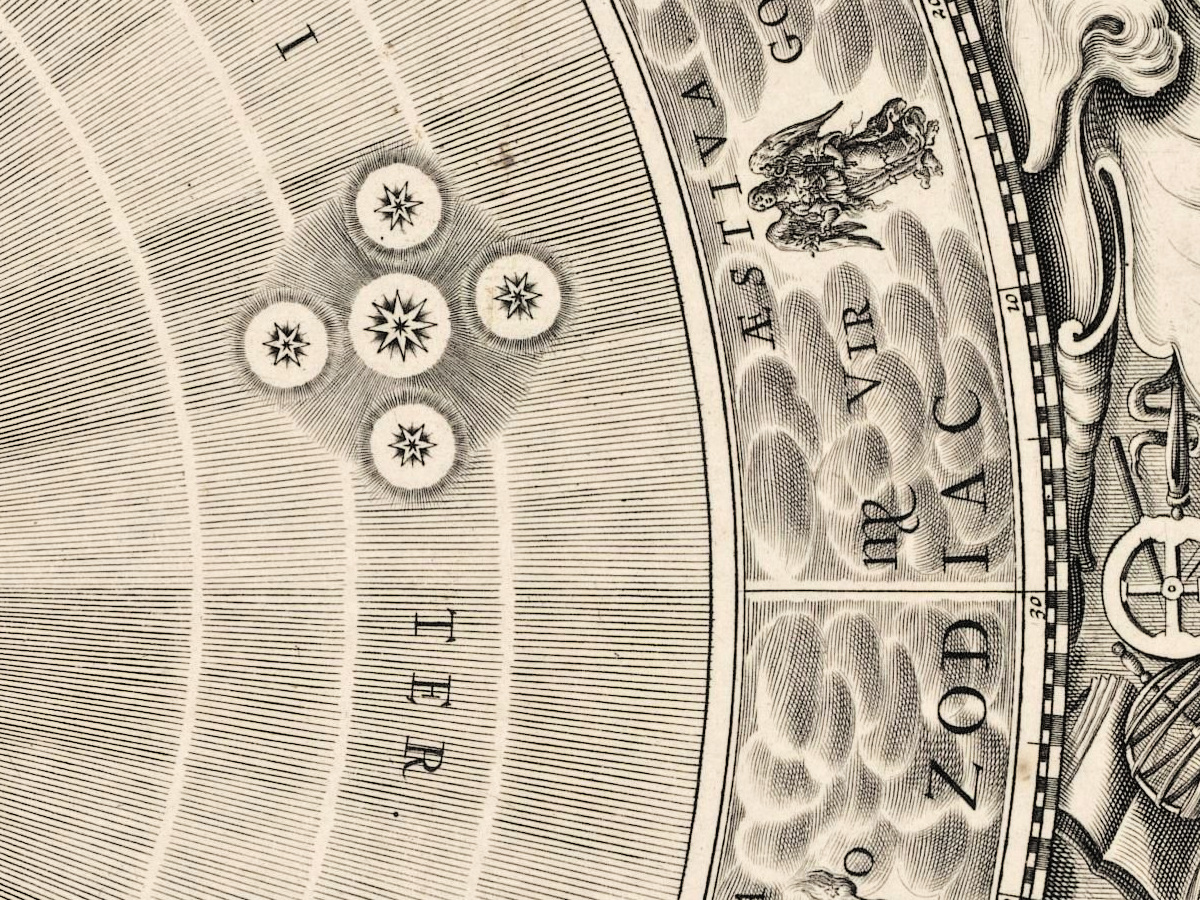
Around Jupiter the engraver drew four small bodies. Those are the moons Galileo first saw in 1610, and they are the reason the sheet is more than decoration: a planet with satellites of its own was the observation that made a sun-centred system thinkable. The plate carries them as a matter of course, less than a century after they were found.
The plate, the publishers and the year
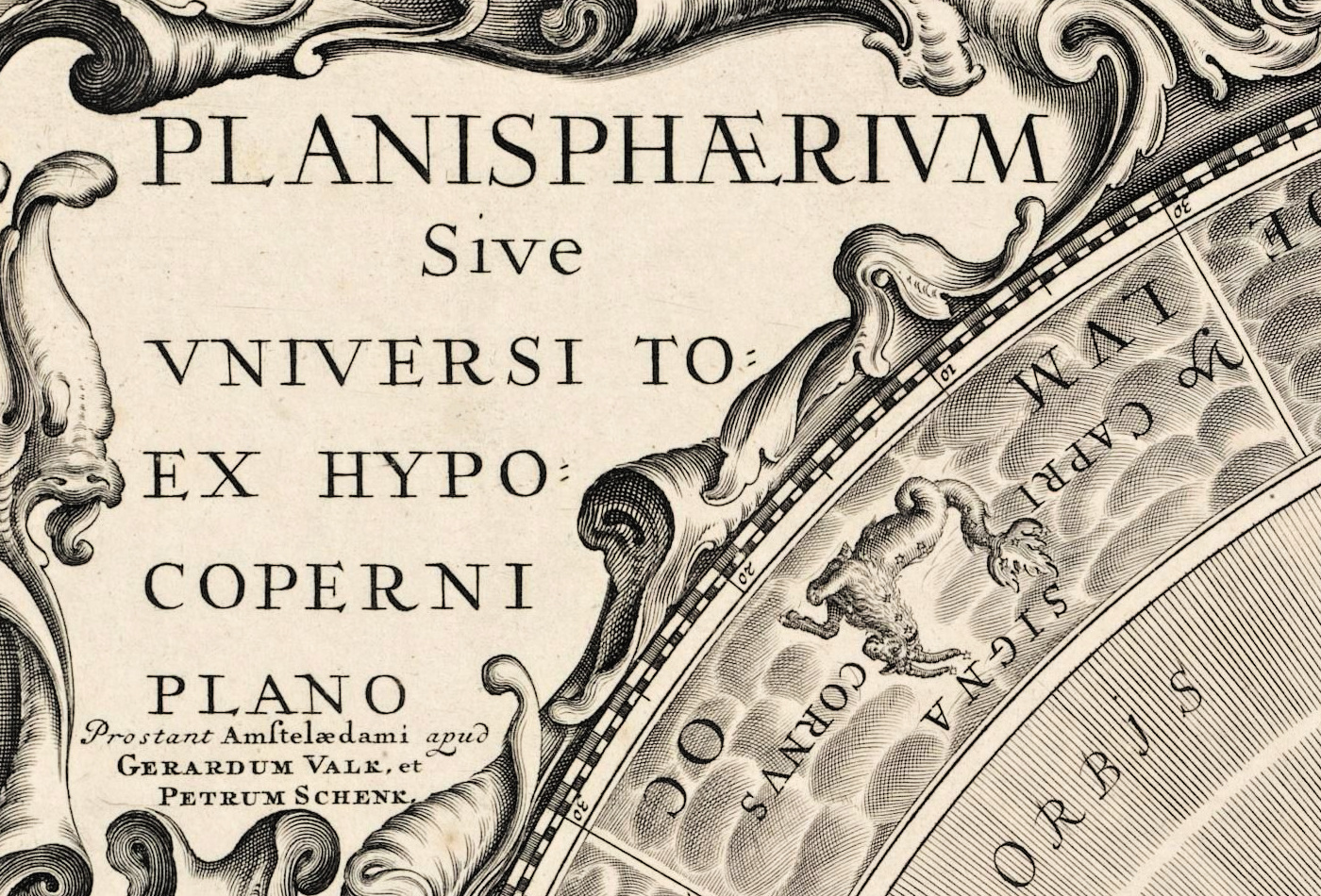
The Rijksmuseum gives two dates for this sheet, and both are true of it: the plate was cut in 1660, and this impression was published in an atlas in 1708. The publishers named on it are Pieter Schenk the elder and Gerard Valck of Amsterdam, who bought the old copper plates and reissued the series under their own imprint. We date the card by the object you are getting — 1708 — and keep 1660 for the plate. The engraver is not named; the record calls the maker anonymous, and says engraving without naming a metal.
Your file
| Original | anonymous engraver, published by Pieter Schenk (I) and Gerard Valck, Amsterdam, 1708; plate of 1660 |
| Sheet | 440 × 525 mm |
| Scan | full sheet 5898 × 5004 px; the plate inside the trimmed border 4501 × 3771 px. From the museum's own scan, not an upscale |
| Print size at 300 dpi | the map prints to 38 cm (15 in), the full sheet with margins to 49 cm (19 in) |
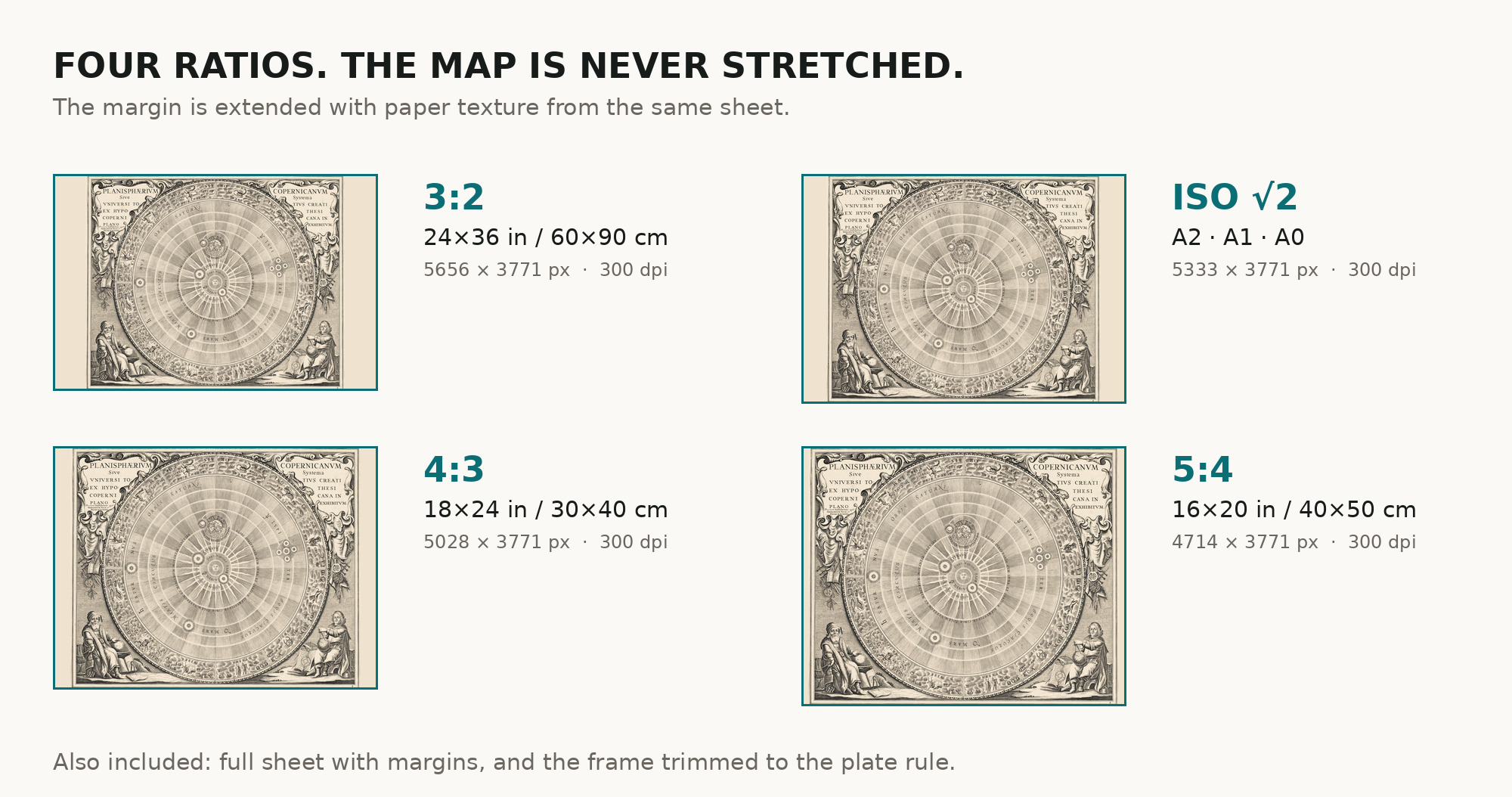
| You download | six ZIP archives: full sheet, trimmed, 3:2, 4:3, 5:4 and ISO A |
| Inside each one | one JPEG at 300 dpi, the restoration passport as a PDF, a READ ME |
How to print
- Pick the archive whose proportions match your frame, so nothing is cropped or stretched.
- Ask for matte fine-art paper, printed in sRGB with auto-enhancement off. A near-square sheet like this one wants a square mount rather than a landscape frame.
- Where to print it: print shops near you and checked prices at online labs.
Source and rights
Rijksmuseum, Amsterdam, object number RP-P-AO-29-1-6. The museum publishes the image as public domain under the Creative Commons Public Domain Mark 1.0. There is no TIFF master in the package. Catalogue record: Rijksmuseum →
Questions
What exactly do I get after paying?
Six ZIP archives, each with one JPEG at 300 dpi, a restoration passport as a PDF and a READ ME. They differ only in framing.
Why is the year 1708 and not 1660?
Because 1660 is the date of the copper plate and 1708 the date of this impression, which Schenk and Valck published in their atlas. The card names the object in front of you.
Do the constellations match the modern ones?
This particular sheet is not a constellation chart: it shows the planetary system, with the zodiac only as the outer ring. The zodiac signs are the familiar twelve.
Features
- Latin
Attachments
Reviews
No reviews found
See also
-
 Antique Moon Map c. 1702 — Doppelmayr, Tabula Selenographica
-
Antique Star Chart 1708 — Haemisphaeria Sphaerarum
-
Antique Star Chart 1708 — Coelistellati Christiani
-
Antique Star Chart 1708 — Situs Terrae, Ptolemaic Heavens
-
Antique Star Chart 1708 — Planisphaerium Ptolemaicum
-
Antique Star Chart 1700 — Allard, Southern Celestial Hemisphere